
Building Better AI Workflows
A practical look at structuring research, implementation, testing, and verification when working with coding agents.
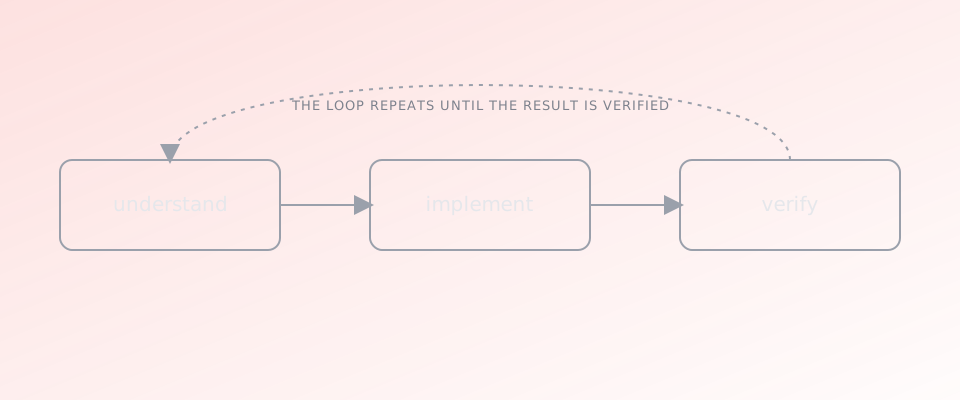
Good work with coding agents is less about finding a single perfect prompt and more about creating a reliable loop around the model. The useful unit is a small, observable workflow: understand the context, make a focused change, and verify what happened.
Make the work legible
Before implementation, write down the shape of the problem. A short plan gives the agent boundaries, exposes missing decisions, and makes it easier to tell whether a result is complete. The plan should be specific enough to guide the work without turning into a second implementation.
type WorkflowStep = {
  name: string
  run: () => Promise<void>
}

export async function execute(steps: WorkflowStep[]) {
  for (const step of steps) {
    await step.run()
  }
}
Close the loop with verification
Verification is not optional — it's the step that turns a guess into a fact. At minimum, that means running type checks and the relevant test suite, the same habits described in The Shape of a Useful Code Review.
Type checks pass without new suppressions
Linting is clean, not silenced
The relevant test suite runs and passes
A manual pass through the changed surface, not just the diff
A minimal loop
Read the diff before running anything
Run the checks that actually cover the change
Confirm the result matches the original intent, not just that it compiles
A workflow you can't observe is a workflow you can't trust.
None of this is exotic. It's the same discipline that makes any engineering work reviewable — applied consistently enough that it holds up when the agent, not just a human, is the one making the change.